




14 September 2026
|
8:10:45
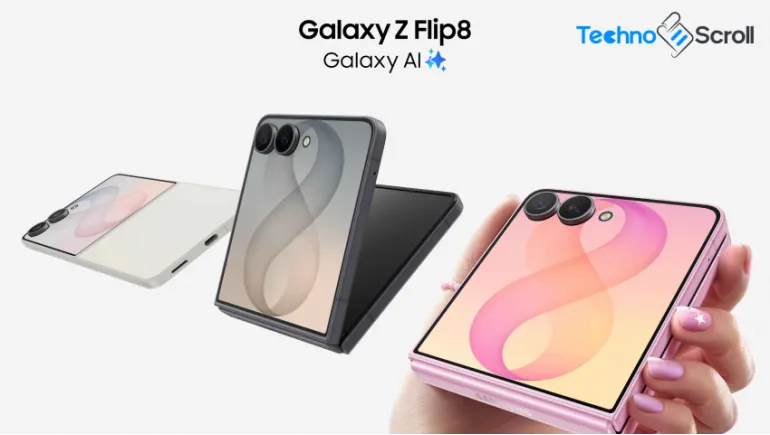
Samsung launched the Galaxy Z Flip 8 on July 22, 2026, at its Unpacked event in London, alongside the Galaxy Z Fold 8 and Fold 8 Ultra. After spending time with the device, one thing stands out immediately: this is the thinnest, lightest flip phone Samsung has ever made. But is it a meaningful upgrade, or mostly a refinement? Here's a full breakdown to help you decide if the Z Flip 8 deserves a spot in your pocket.
At 180 grams and just 6.1mm thick when unfolded, the Galaxy Z Flip 8 is eight grams lighter and noticeably slimmer than the Z Flip 7. Samsung calls it the thinnest and lightest flip-style foldable it has ever produced, and holding it, that claim feels earned. The hinge folds flatter, and the overall in-hand feel is more refined than any previous Flip model.
The device carries an IP48 water resistance rating, consistent with prior generations, though it's worth noting that some competing foldables from OnePlus and Honor have already moved to the more robust IP58 standard. If durability against dust and heavier splashes matters to you, this is one area where Samsung hasn't caught up.
The Z Flip 8's biggest usability upgrade lives on the cover screen. The FlexWindow display now runs at an adaptive 60-120Hz refresh rate and supports a wider range of apps directly from the outside of the phone, reducing how often you need to unfold it for quick tasks. The main internal display retains its familiar size and resolution from the Z Flip 7, so if you were hoping for a bigger unfolded screen, that upgrade didn't happen this generation. What did improve is Samsung's mDNIe visual processing, which delivers richer color and contrast across both screens.
Powering the Z Flip 8 is a customized Snapdragon 8 Elite Gen 5 for Galaxy chipset, paired with 12GB of RAM. Samsung says the new NPU delivers a 41% performance boost over the previous generation, translating into faster on-device Galaxy AI processing and smoother everyday multitasking. In daily use, the phone handles typical tasks, streaming, and app switching without hesitation.
Improved GPU architecture and Vulkan integration bring real-time ray tracing support to supported games, a first for the Z Flip line. Combined with the more efficient chipset, gaming performance feels notably smoother than on the Z Flip 7, especially in graphically demanding titles, though the compact form factor still isn't the most comfortable shape for extended gaming sessions.
This is where the Z Flip 8 shows its age. The rear camera system uses the same 50MP main sensor and 12MP ultrawide lens that Samsung has shipped since the Z Flip 6, alongside a 10MP selfie camera. For the third consecutive generation, Samsung hasn't upgraded the core camera hardware, and there's still no dedicated telephoto lens, a feature some competitors now offer at similar price points.
That said, real-world image quality remains solid thanks to software processing improvements and the mDNIe engine, and the flexible form factor still enables creative shooting angles, like propping the phone open at an angle for hands-free photos, that traditional phones can't easily replicate.
The battery capacity holds steady at 4,300mAh, but Samsung has introduced a silicon-carbon battery this generation, a technology Chinese competitors have used for a couple of years already. This delivers better energy density within the same physical size, translating to up to 31 hours of continuous video playback. It's a welcome, if overdue, improvement, and charging speeds have also increased slightly over the Z Flip 7.
The Z Flip 8 ships with One UI 9 and what Samsung is calling Galaxy AI 3.0, deepened by tighter Gemini integration. This makes it the most AI-capable Z Flip to date, with on-device tools for real-time translation, smarter suggestions, and generative photo editing all benefiting from the upgraded NPU. For anyone who leans heavily on AI features day to day, this is a genuine step forward, even if the core hardware around it feels iterative.
The Galaxy Z Flip 8 starts at $1,199.99 for the 256GB model, a $100 increase over the Z Flip 7's launch price, with a 512GB option also available. That price bump is partially justified by the new chipset, faster charging, and the silicon-carbon battery, but it's a modest justification for a phone that keeps the same cameras and battery capacity as its predecessor.
If you already own a Z Flip 7, the case for upgrading is thin. The camera hardware, display size, and battery capacity are unchanged. What you're paying the extra $100 for is a lighter, thinner design, a faster chipset, ray tracing support, and a more capable FlexWindow. Unless a trade-in deal significantly closes the price gap, most Z Flip 7 owners are better off holding onto their current phone.
For first-time foldable buyers, the Galaxy Z Flip 8 is the best entry point into Samsung's clamshell lineup to date, combining a genuinely improved design with meaningful AI and performance upgrades. Just go in with clear expectations about the camera system, which hasn't meaningfully changed in three generations. For existing Z Flip 7 owners, this upgrade only makes sense if trade-in value narrows the price gap significantly.










Comments
There are no comments for this Article.