




02 October 2026
|
8:10:45
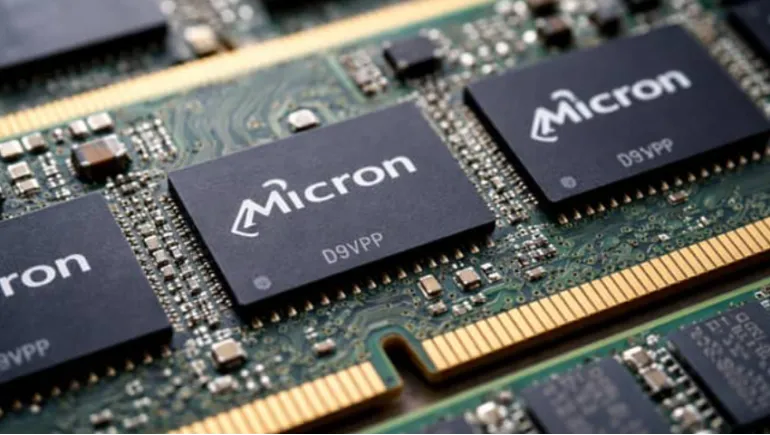
Micron Technology just delivered one of the most dramatic earnings reports of the AI boom, and it's forcing investors to rethink how they value the entire memory chip sector. The company's fiscal third-quarter 2026 results didn't just beat expectations; they shattered them, sending shares surging and reigniting debate over whether the "AI memory trade" still has room to run.
Micron reported Q3 FY2026 revenue of $41.46 billion, up dramatically from $9.30 billion a year earlier and well ahead of Wall Street's consensus estimate of roughly $35.69 billion. Non-GAAP net income came in at $28.86 billion, or $25.11 per diluted share, beating analyst expectations by nearly 24%.
Perhaps most striking was the margin expansion. Non-GAAP gross margin hit 84.9%, a company record, compared to just 39% in the same quarter last year. Adjusted operating margin reached 81.2%, up from 26.8% a year earlier, numbers more typical of a software company than a chipmaker.
The market's reaction was immediate: shares jumped roughly 14% in after-hours trading, extending a year-to-date gain of around 325%. On the earnings call, CEO Sanjay Mehrotra said the company currently has no visibility into when memory supply will be able to catch up with demand a comment that reinforced the bullish case for continued pricing power.
The engine behind Micron's results is High Bandwidth Memory, or HBM, a specialized memory architecture built specifically for AI accelerators. Unlike conventional DRAM, which sits flat on a circuit board, HBM stacks memory dies vertically and connects them through thousands of microscopic channels, placing the memory directly beside the AI processor to shorten data paths and dramatically increase bandwidth.
Micron's newest generation, HBM4, entered high-volume production this year for Nvidia's next-generation Vera Rubin platform. It doubles the data bus width of the prior generation and delivers more than 2.8 terabytes per second of bandwidth per stack, a meaningful leap that's helping Micron secure long-term supply agreements with major customers.
By segment, Cloud Memory revenue reached $13.77 billion and Core Data Center revenue hit $11.52 billion, both up massively from the prior year, underscoring how central AI infrastructure spending has become to Micron's business.
Industry analysts describe the current environment not as a typical cyclical shortage but as a structural reallocation of global memory production toward AI infrastructure. Conventional DRAM contract prices reportedly rose 90 to 95% quarter-over-quarter in early 2026 the largest quarterly jump on record as manufacturers prioritize higher-margin HBM production over consumer-grade memory.
That reallocation has real consequences beyond Wall Street. As memory makers channel capacity toward AI data centers, everyday products like laptops, phones, and gaming PCs are seeing rising component costs. Analysts don't expect meaningful relief until new fabrication capacity comes online, a process that typically takes 18 to 24 months.
Despite the eye-popping gains, some analysts argue Micron's valuation remains reasonable relative to other AI beneficiaries when measured against forward earnings, given the scale of its profit growth. Others caution that memory has historically been a boom-and-bust cycle, and today's record margins could eventually invite new capacity that erodes pricing power.
Before treating Micron's results as a green light, it's worth weighing a few factors:











Comments
There are no comments for this Article.