




02 October 2026
|
8:10:45
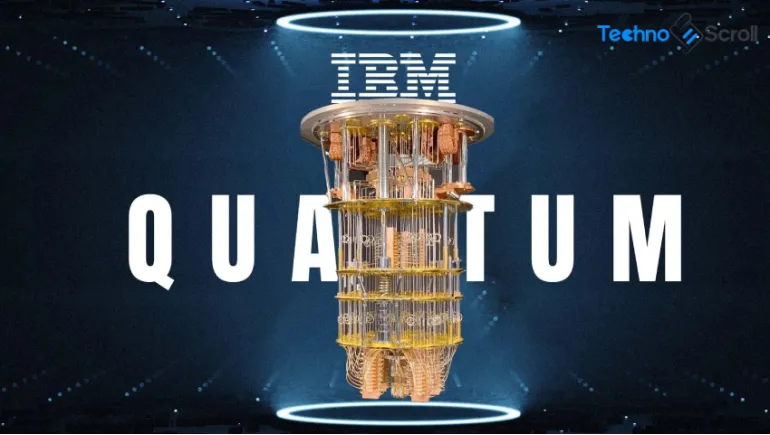
Quantum computing has spent years living somewhere between research labs and headline promises. That's starting to change. IBM has laid out one of the most detailed and financially backed roadmaps in the industry for moving quantum computing from experimental hardware to large-scale, fault-tolerant systems capable of solving problems classical computers cannot touch. With a $10 billion investment commitment and a clear technical roadmap running through 2029 and beyond, IBM is positioning itself for what may be the industry's next major scale-up.
IBM's quantum computing roadmap centers on one core goal: building the world's first large-scale, fault-tolerant quantum computer. The company calls this system IBM Quantum Starling, and it's slated for completion in 2029 at a new IBM Quantum Data Center in Poughkeepsie, New York.
To get there, IBM isn't attempting one giant leap. Instead, the roadmap is built around a sequence of modular processors, each one testing and validating a specific piece of the fault-tolerant puzzle:
This step-by-step structure reflects a broader lesson the quantum computing industry has learned in recent years: scaling isn't just about packing more qubits onto a single chip. It's about enabling multiple quantum processors to communicate and function together as one coherent system.
IBM Quantum Starling is designed to be the company's first large-scale, fault-tolerant quantum computer, and by IBM's own definition, a "large-scale" system is one capable of executing more than 100 million quantum operations across hundreds of logical qubits. Starling is built to hit exactly that mark 200 logical qubits running 100 million quantum operations.
To put Starling's scale in perspective, IBM has stated that representing its full computational state would require the combined memory of more than a quindecillion- 10^48- of the world's most powerful supercomputers. IBM projects Starling will be capable of performing roughly 20,000 times more operations than today's existing quantum systems.
Starling isn't the final destination, though. It's designed as the foundation for IBM Quantum Blue Jay, a future platform intended to scale to 2,000 logical qubits and 1 billion quantum operations, extending IBM's roadmap well past 2029.
The biggest obstacle standing between today's quantum computers and genuinely useful, large-scale quantum applications isn't qubit count it's error correction. Quantum bits are extremely sensitive to noise and environmental interference, and without robust error correction, calculations become unreliable at scale.
IBM's approach relies on qLDPC (quantum low-density parity-check) error-correcting codes, a newer method the company says reduces physical qubit overhead by up to 90% compared to older error correction techniques. In practical terms, that means IBM needs far fewer physical qubits to produce each reliable "logical qubit," the stable, error-corrected unit that actually performs computations. This efficiency gain is central to why IBM believes large-scale fault tolerance is achievable by 2029 rather than remaining a distant, decades-out goal.
While Starling remains the headline goal for 2029, IBM's near-term roadmap for 2026 centers on Quantum Kookaburra, the company's first processor designed to combine quantum memory with logic operations in a single fault-tolerant module. Kookaburra represents a critical proof point: it needs to demonstrate that encoded information can be stored and processed together, which is the basic building block for scaling fault-tolerant systems beyond a single chip.
Notably, IBM has also stated it expects to achieve quantum advantage the point where quantum computers meaningfully outperform classical systems on real-world problems by 2026, ahead of full fault tolerance. That distinction matters for anyone tracking the field: quantum advantage and large-scale fault tolerance are related but separate milestones, and IBM's roadmap treats them as sequential achievements rather than a single finish line.
In June 2026, IBM announced plans to invest more than $10 billion in quantum computing over the next five years, spanning research and development, capital expenditure, manufacturing scale-up, ecosystem partnerships, and acquisitions. This is a significant signal for an industry that has often struggled to translate research breakthroughs into commercial viability.
The investment also reinforces IBM's existing software ecosystem. Qiskit, IBM's quantum software stack, is used by nearly 70% of quantum developers today and has executed more than 4 trillion quantum circuits, according to IBM. That kind of developer adoption gives IBM a practical advantage: as fault-tolerant hardware comes online, there's already a large base of developers and tools ready to build on it.
IBM isn't the only company chasing large-scale quantum computing, but its approach stands out for combining a detailed, milestone-based public roadmap with substantial capital backing. Where some quantum computing companies have focused primarily on maximizing physical qubit counts, IBM's modular, error-correction-first strategy reflects a bet that reliability and scalability, not raw qubit numbers will determine which systems reach practical usefulness first.
This matters for organizations and researchers evaluating which quantum computing platform to invest time and resources into. A roadmap grounded in incremental, testable milestones (Loon, Kookaburra, Cockatoo, Starling) offers more transparency than vague long-term promises, making it easier to track real progress rather than take claims at face value.
If IBM's roadmap holds, the implications extend well beyond the company itself. A working large-scale, fault-tolerant quantum computer could open the door to practical applications in materials science, drug discovery, cryptography, and complex optimization problems areas where classical computers hit fundamental limits.
That said, quantum computing's history includes plenty of ambitious timelines that shifted over time. IBM has generally delivered on prior roadmap commitments, but Starling's 2029 target still depends on multiple technical milestones executing successfully in sequence. Kookaburra's 2026 debut and Cockatoo's 2027 module-linking demonstration will serve as key checkpoints for whether IBM's timeline stays on track.










Comments
There are no comments for this Article.