




13 September 2026
|
8:10:45
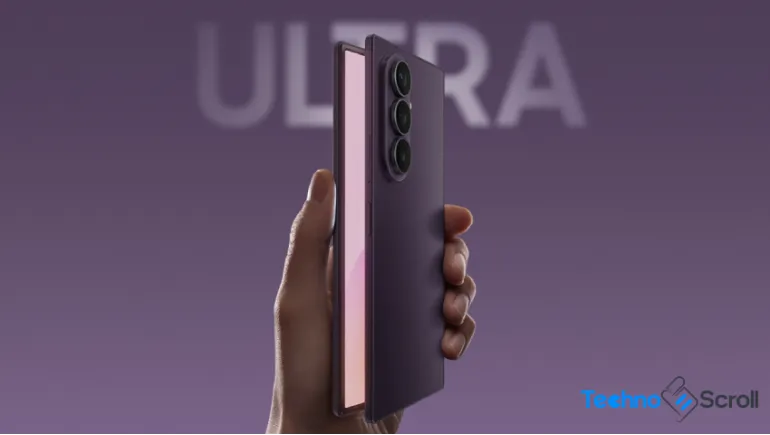
Samsung unveiled the Galaxy Z Fold 8 Ultra on July 22, 2026, at its Unpacked event in London, positioning it as the direct successor to the Galaxy Z Fold7 and the flagship of its now two-tier Fold lineup. While the new standard Galaxy Z Fold 8 introduces a wider form factor, the Fold8 Ultra sticks with the tall, book-style design Fold owners know well, refining nearly every part of the experience. Here's a complete look at what's new.
One of the most talked-about upgrades on the Fold8 Ultra is its new generation teardrop hinge, paired with titanium reinforcement under the inner panel. Samsung also added a matte coating to the inner display to reduce glare. Together, these changes let the screen open flatter than on the Z Fold7, resulting in a noticeably less visible crease. Reviewers who have gone hands-on note that while the Z Fold7's crease was already close to unnoticeable, the Fold8 Ultra pushes that improvement even further, especially in reflective lighting.
Beyond the display, Samsung reimagined the edge of the device to make unfolding it easier, addressing a common complaint that earlier Fold hinges felt stiff to open one-handed. The frame remains Advanced Armor Aluminum, matching the Z Fold7's build, but the cover screen now uses Corning Gorilla Glass Ceramic 3, an upgrade over the Ceramic 2 glass on the previous generation. The rear panel keeps Corning Gorilla Glass Victus2, and the device maintains an IP48 rating for dust and water resistance.
The Fold8 Ultra keeps its familiar 8-inch main display, but Samsung has boosted brightness by 15% on both the cover screen and main screen compared to the Z Fold7. Combined with the reduced glare from the new matte coating, this makes the display noticeably easier to use outdoors and under harsh lighting, a practical upgrade for anyone who relies on the device for outdoor work or content consumption.
Samsung is calling the Fold8 Ultra's camera setup the best in the entire Galaxy Z series. It pairs the familiar 200MP Wide sensor with an upgraded 50MP Ultra Wide lens, delivering four times the detail of the Ultra Wide camera on the Z Fold7. Improved f-stops also bring a 34% brightness improvement in low-light video, addressing one of the more common criticisms of foldable cameras in dim conditions.
This camera upgrade matters because foldables have historically lagged behind traditional flagships in photography. By meaningfully improving the secondary lens rather than just the headline sensor, Samsung is closing that gap for buyers who want flagship-level photography without giving up a foldable form factor.
All three of Samsung's new foldables, the Fold8 Ultra, the standard Fold8, and the Z Flip8, share the same chipset upgrade this year: the Snapdragon 8 Elite Gen 5 for Galaxy. Paired with 16GB of RAM on the Fold8 Ultra, this delivers flagship-level performance for demanding multitasking, gaming, and Galaxy AI processing. Samsung markets the Fold8 Ultra as a genuine multitasking machine, capable of running Multi Window side-by-side, essentially unfolding into what feels like two full phone screens working together.
Battery capacity jumps to 5,000mAh, the same size battery found in the Galaxy S26 Ultra, up from 4,400mAh on the Z Fold7. Combined with Super Fast Charging 2.0, this is one of the more meaningful practical upgrades for daily use, particularly for buyers who found the Z Fold7's battery life inconsistent under heavy multitasking or gaming.
Running Android 17 with One UI 9, the Fold8 Ultra ships with Samsung's most current Galaxy AI suite, backed by deep Gemini integration. Combined with the large 8-inch display, this makes tasks like live translation, generative photo editing, and AI-assisted multitasking noticeably more usable than on a standard-sized phone, since there's simply more screen real estate for split-view AI tools to work with.
No. Like the Z Fold7 before it, the Fold8 Ultra does not support the S Pen. Samsung moved away from stylus support starting with the Z Fold7 in favor of a thinner, lighter chassis, and that decision carries over here. Buyers who relied on S Pen input for note-taking or sketching on earlier Fold models should factor this into their decision.
Compared directly to the Z Fold7, the Fold8 Ultra wins on camera quality, charging speed, battery capacity, hinge design, and display brightness. The Z Fold7, meanwhile, still holds an edge in value, with prices now ranging from roughly $1,299 to $1,499 for buyers who don't need this year's upgrades, along with the reassurance of a track record now proven through nearly a year of real-world use. On paper, the generational jump might look modest since both devices share the same 8-inch inner display and general form factor, but in practice, Samsung addressed several of the most common Z Fold7 owner complaints: hinge stiffness, display glare, low-light camera performance, and battery life under heavy use.
The Galaxy Z Fold 8 Ultra starts at $2,099.99 for the base configuration, a $100 increase over the Z Fold7's launch price. Samsung has attributed part of this year's price increases across its foldable lineup to rising memory chip costs, though the company kept the increase modest to remain competitive. As of this writing, Samsung has not published official Bangladesh pricing for the Fold8 Ultra; buyers in Bangladesh should check with authorized Samsung retailers for confirmed local pricing once it becomes available, as regional pricing typically differs from U.S. figures due to import duties and taxes.
For buyers upgrading from a Z Fold6 or earlier, the Fold8 Ultra is an easy recommendation, bringing meaningful gains in camera quality, battery life, display brightness, and hinge durability. For existing Z Fold7 owners, the case is more nuanced: the improvements are real but incremental, and unless a trade-in deal significantly narrows the price gap, sticking with your current device remains a reasonable choice. First-time foldable buyers who want the most capable, flagship-grade experience Samsung currently offers should consider the Fold8 Ultra the top pick in the lineup, provided the price fits their budget.












Comments
There are no comments for this Article.