




13 September 2026
|
8:10:45
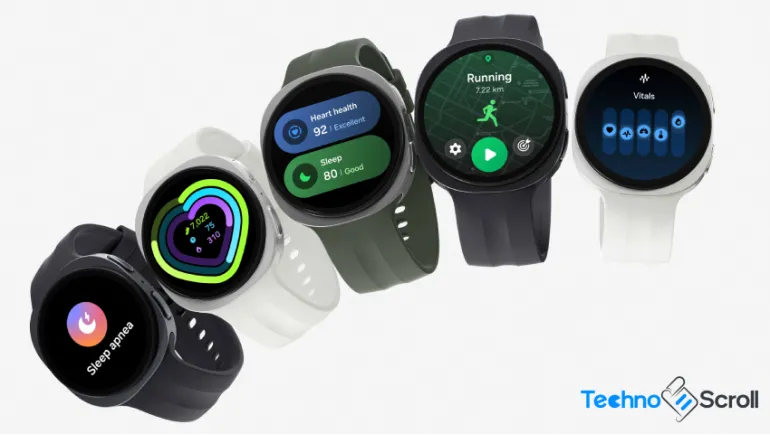
Samsung unveiled the Galaxy Watch 9 on July 22, 2026, at its Unpacked event in London, alongside the Galaxy Watch Ultra2 and its new foldable phone lineup. Where last year's Galaxy Watch 8 took the risk of introducing an entirely new squared design, the Watch 9 takes a different approach: refining the formula with a faster chip, a bigger battery, and a noticeably deeper set of health features. Here's everything you need to know about Samsung's latest smartwatch.
The Galaxy Watch 9 keeps the same cushion-round design language Samsung introduced with the Watch 8, rather than attempting another dramatic redesign. It's available in the same two sizes as before, 40mm and 44mm, each with a Super AMOLED display protected by Sapphire Crystal glass. Display specs are effectively unchanged from last year, with peak brightness holding at 3,000 nits across both sizes. For anyone hoping for a bold new look, the Watch 9 won't deliver it, but for buyers who liked the Watch 8's design, that consistency is a reasonable trade-off.
The most significant hardware change is under the hood. The Galaxy Watch 9 moves to the Snapdragon Wear Elite platform, marking the first time Samsung has used a Qualcomm chip instead of its own Exynos silicon in a standard Galaxy Watch. Built on a 3nm process, the chip pairs a five-core CPU with an Adreno A622 GPU, a meaningful step up from the previous Exynos W1000. Notably, this is the same core platform used in the more expensive Galaxy Watch Ultra2, meaning the standard Watch 9 now shares its computing foundation with Samsung's flagship wearable rather than receiving a lesser chip, a genuine win for buyers who don't need Ultra-tier durability or battery life.
Battery capacity grows on both sizes: the 40mm model's cell increases by 20% to 390mAh, while the 44mm model gains a smaller bump to 445mAh. Despite the larger batteries, Samsung still quotes up to 30 hours of use with the Always-On Display enabled, the same figure claimed for the Watch 8. In practice, this larger capacity is likely to serve as extra headroom for real-world use rather than a dramatically longer runtime, particularly for users who rely on GPS tracking or LTE connectivity throughout the day. Both sizes support WPC-based wireless fast charging.
While the design and core sensor package remain close to the Watch 8, Samsung has clearly focused this generation's energy on software-driven health tracking. The Galaxy Watch 9 introduces a wider set of subscription-free health features, including Vitals, Daily Cardio Load, Heart Health Score, and Fitness Index. This positions the watch as a direct answer to recovery-focused wearables like WHOOP, which typically place similar in-depth analysis behind a monthly subscription fee.
At Unpacked, Samsung's Device eXperience Division CEO, TM Roh, framed this shift as central to the company's broader wellness ambitions, describing a mission to help move healthcare from reactive treatment toward proactive, everyday care. With more than 79 million people already using Samsung Health, features like Heart Health Score are designed to help catch potential issues earlier, rather than simply logging data after the fact.
These advanced health features do come with a few requirements: Samsung specifies Android 13 or higher and Samsung Health version 7.0 or higher on the paired phone to access Vitals, Fitness Index, Daily Cardio Load, and Heart Health Score.
The Galaxy Watch 9 also introduces Raise to Talk, a hands-free AI feature that lets you start a conversation with Google Gemini simply by raising your wrist. This triggers an immediate AI response without needing to touch the screen, designed for quick, on-the-go questions and tasks. It's a small but practical example of how Samsung is weaving generative AI more directly into the smartwatch experience, rather than confining it to companion phone apps.
The Watch 9 ships with Wear OS 7 and Samsung's One UI 9 layered on top, giving it Samsung's latest smartwatch software experience out of the box. This pairing brings a smoother, more responsive interface alongside deeper integration with the broader Galaxy ecosystem, including phones, tablets, and earbuds running the same generation of Samsung software.
The Galaxy Watch 9 starts at $379.99 for the 40mm model with Bluetooth and Wi-Fi connectivity only, with LTE and the larger 44mm size available at higher price points. That starting price represents roughly a 10% increase over the Galaxy Watch 8's launch price, reflecting the chipset upgrade and expanded health feature set.
If you're deciding between the two, the calculation has shifted this year. Because the Watch 9 and Watch Ultra2 now share the same Snapdragon Wear Elite platform, the case for choosing the pricier Ultra2 no longer rests on raw performance. Instead, it comes down to battery size, with the Ultra2's 800mAh cell and 5,000-nit display, along with its more rugged durability rating and dive-tracking capabilities. If you don't need multi-day battery life, extreme brightness, or dive features, the standard Watch 9 is a considerably harder watch to pass up this year than in previous generations.
For new smartwatch buyers, the Galaxy Watch 9 is an easy recommendation, offering flagship-level silicon, genuinely useful subscription-free health tracking, and hands-free AI features at a moderate price point. For existing Galaxy Watch 8 owners, the case is less compelling. The design and core sensor package remain largely unchanged, and while the chipset and health software upgrades are real, they may not justify the roughly 10% price increase for anyone who already owns last year's model. Those most likely to benefit are buyers upgrading from a Galaxy Watch 6 or earlier, or newcomers to the Galaxy Watch ecosystem who want Samsung's most current wearable technology without paying for the Ultra2's extra durability and battery capacity.












Comments
There are no comments for this Article.