




An MIT researcher let an AI agent run routine qubit measurements while she worked elsewhere. Here's what GPT-5.6 Sol actually did, where it needed help, and why it matters.
Preparing a quantum chip for research is slow, repetitive work. Before a physicist can run the experiment they care about, they often run hundreds or thousands of preliminary measurements. Now an AI model is taking on part of that job. OpenAI recently published a case study showing GPT-5.6 Sol running real measurements on a real quantum chip at MIT.
This article explains what happened, what the results do and don't prove, and how AI-assisted quantum experiments compare with the traditional approach. One note on sourcing: the main case study comes from OpenAI itself, so it's a vendor account, not an independent audit. Where possible, this article says so.
What Is GPT-5.6 Sol?
GPT-5.6 Sol is the most capable model in OpenAI's GPT-5.6 family, built for tasks that need deep reasoning. Reporting says OpenAI previewed it on June 26, 2026, and released it more widely on July 9 alongside two sibling models, Terra and Luna. In the MIT work, Sol didn't run alone. Researchers used it through Codex, OpenAI's agent tool, which lets the model operate software and take actions instead of only answering questions.
What Happened at MIT
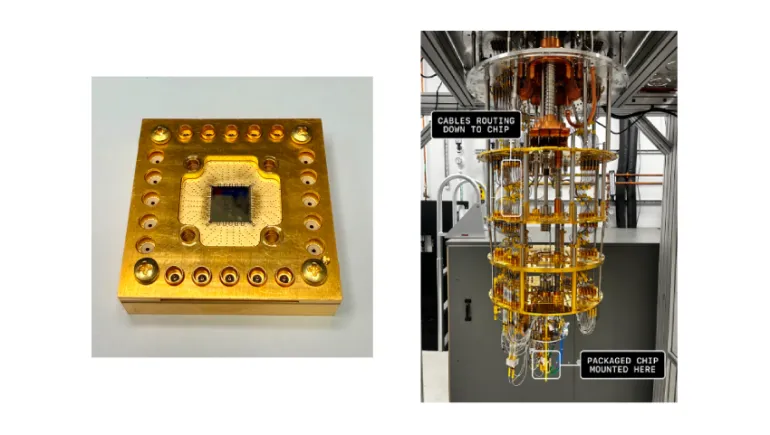
Beatriz Yankelevich, a graduate student in MIT's Engineering Quantum Systems Group, tested whether AI could streamline her workflow. Once a superconducting qubit chip is built, packaged, and cooled, researchers work with it entirely through software. That makes it a natural testbed for an AI agent.
Yankelevich connected Codex to the lab software that coordinates her experiments. The agent could then run measurements, analyze the results, and decide what to try next. She tested it on a six-qubit chip, a common setup for checking fabrication quality.
The Tasks the AI Handled
According to the case study and coverage of it, GPT-5.6 Sol measured qubit transition energies, set control-pulse values, tuned readout settings, and estimated coherence times. Coherence time tells you how long a qubit keeps usable quantum information. The agent also ran a Rabi measurement, which finds the pulse needed to flip a qubit's state.
One report on the study says the agent completed 40 target measurements, with researchers stepping in to improve only four. That figure comes from a secondary summary of OpenAI's work, so treat it as reported, not independently confirmed. Yankelevich described the payoff in simple terms: she could have agents run measurements overnight or while she worked in the cleanroom, then check in from her phone and steer them if needed.
Where It Struggled
The limits matter as much as the wins. The agent worked well when the signals were clear. It had trouble with noisy or weak data, and those cases pulled a human expert back in. Interpreting an ambiguous physical result still takes experienced judgment.
What This Does Not Mean
Several headlines could give the wrong impression, so it's worth being precise. The AI did not discover new physics. It did not replace the researcher. Yankelevich built the supporting infrastructure and gave the agent detailed guidance. The chip was relatively simple, and the numbers reported, such as coherence times near 60 microseconds, describe that one device. They are not a general performance claim for AI-calibrated chips.
The honest summary is narrower and still useful: an AI agent automated a substantial part of a routine, well-defined lab workflow.
AI-Assisted vs. Traditional Quantum Experiments
The clearest way to see the change is side by side.
- Routine measurements: Traditionally, a researcher runs or supervises each step by hand. With an AI agent, the agent runs the sequence and adapts parameters as results arrive.
- Time and attention: Calibration can take a skilled person days. An agent can work overnight, freeing the researcher for design and analysis.
- Judgment calls: Humans still win on messy, ambiguous data. The agent still needs oversight.
- Consistency: Software follows the same procedure every time, though it can also repeat a mistake if nobody checks.
This is also different from AI quantum simulation. Simulating quantum systems on classical hardware, often with GPUs, is a separate field. The MIT work is about automating physical lab operations, not replacing the experiment with a simulation.
Why This Matters for Quantum Research
Quantum hardware is hard to scale partly because tuning it takes so much skilled labor. Every new chip needs careful calibration, and that work grows with qubit count. If AI agents can handle the routine layer, labs could test more chips and more ideas with the same staff. Researchers are already exploring this direction more broadly. A separate paper on arXiv, for example, evaluates GPT-5.6 Sol alongside earlier models on autonomous quantum sensing experiments.
Should Your Lab or Team Try It?
If you run an experimental lab, the case for a pilot is reasonable, provided your setup is controlled through software and your workflows are well defined. Start with a low-risk task, keep a human reviewing results, and expect to invest in the connecting infrastructure. If you don't have that software layer, or your work depends on subtle, noisy signals, the benefit will be smaller. For everyone else, the practical takeaway is simpler: AI is moving from answering scientific questions to doing parts of the lab work, but under close human direction.










Comments
There are no comments for this Article.