


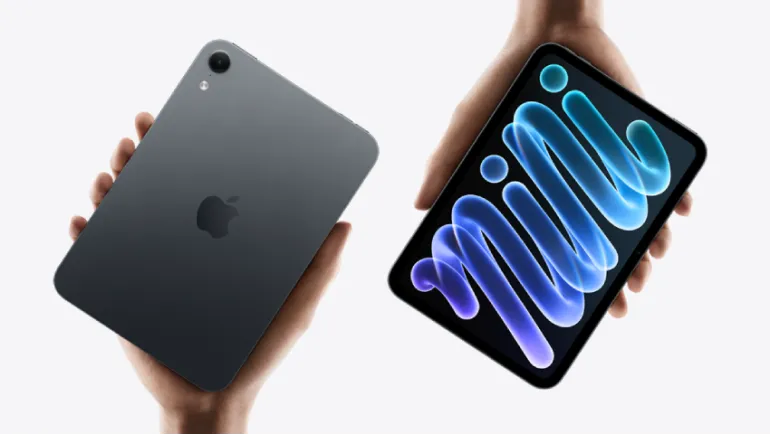
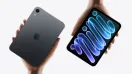
Apple finally gave its smallest tablet an OLED screen. The new iPad mini 2026 went on sale on November 6. This review summarizes what experienced testers found, so you can decide with confidence. The Apple iPad mini OLED delivers deeper blacks, higher HDR brightness, a thinner body, and strong battery life. However, it costs $699, which is $100 more than the previous model's current price. It also lacks a 120Hz refresh rate. Owners of a recent iPad mini can wait, while owners of older models should upgrade.
iPad mini OLED Specifications at a Glance
| Feature | iPad mini (2026) |
|---|---|
| Display | 8.5-inch OLED, P3 wide color |
| Peak HDR brightness | 1,200 nits |
| Chip | A20 Pro (2nm) |
| Thickness and weight | 5.4 mm; 255 g (Wi-Fi) |
| Storage | 128GB, 256GB, 512GB |
| Water resistance | IP67 |
| Connectivity | Wi-Fi 7, Bluetooth 6, optional cellular |
| Stylus | Apple Pencil Pro (sold separately) |
| Colors | Midnight and Starlight |
How Good Is the New iPad mini OLED Display?
Deep blacks and rich contrast
The iPad mini OLED display is the main upgrade. Engadget says blacks look exceptionally dark and contrast is excellent. Dim movie scenes look much sharper than on an LCD model. Six Colors adds that Apple built the whole product around this screen.
Brightness and HDR highlights
HDR peak brightness doubles to 1,200 nits. SDR brightness rises from 500 to 600 nits. The panel is not as advanced as the iPad Pro's tandem OLED, but Engadget still ranks it as the second-best display on any iPad.
Screen glare and the nano-texture option
Apple offers an optional nano-texture glass that cuts screen glare. It costs $100 extra and comes only on the 256GB and 512GB models. TechRadar says it pairs well with OLED and helps you use the tablet in any light. Even the standard glass has an anti-glare coating, according to Six Colors.
Does the iPad mini OLED support 120Hz?
No. The tablet has no ProMotion, so it runs at 60Hz. Gizmodo, CNN Underscored, and TechRadar all point this out. The display still looks excellent, but fast scrolling feels less smooth than on an iPad Pro. This is the biggest compromise.
iPad mini OLED vs LCD: What Actually Changes?
Compared with the previous iPad mini, the OLED model brings clear gains:
- Better viewing experience: Higher contrast and punchier HDR.
- Thinner, lighter body: OLED removes the backlight, which saves space and weight.
- Slightly larger screen: The display grows from 8.3 to 8.5 inches, and bezels shrink by 24%.
- A 1-nit minimum brightness: It makes late-night reading more comfortable.
These changes matter most for content consumption, such as video, reading, and games.
Performance: A20 Pro and Gaming
The A20 Pro is Apple's first 2nm iPad chip. CNN Underscored found it scored nearly twice as high as the last model in Geekbench 7. Gizmodo reports that it beat the M4 iPad Air by about 15% in a GPU benchmark. Reviewers also call it an excellent gaming tablet.
One catch: The 128GB and 256GB models use a five-core CPU. Only the 512GB model gets the full six-core chip. Everyday users will rarely notice the difference.
iPad mini OLED Battery Life Review
Battery results impressed testers. TechRadar's lab test lasted 14 hours and 24 minutes. CNN Underscored measured 14 hours and 56 minutes of 4K video playback. That beats the iPad mini 7 (11:30) and the iPad Air M4 (10:00) in the same test. Expect a full day of heavy use.
Is the iPad mini OLED Good for Reading, Streaming, and Drawing?
- Reading: Yes. It is light, bright outdoors, and gentle in dark rooms. Six Colors calls it the best ultraportable reading device in the line.
- Streaming and gaming: Yes. OLED contrast and fast performance make it a strong pocket cinema.
- Digital illustration: Good, thanks to Apple Pencil Pro support. The small screen limits canvas space.
- Portable productivity: Limited. The 8.5-inch screen fits only two windows side by side.
iPad mini OLED Price
The Wi-Fi model starts at $699 for 128GB. The 256GB model costs $799, and the 512GB model costs $999. Cellular adds $150, and nano-texture adds $100. Apple raised the iPad mini 7's price to $599 in June, so the new model costs $100 more. At launch, the old model cost $499.
iPad mini vs iPad Air
The Air gives you a larger screen and more room to multitask, but it uses an LCD panel. Gizmodo says the choice often comes down to paying about $50 more for a larger but less attractive screen. Choose the mini if you value portability and OLED. Choose the Air if you plan to work on the tablet for long periods.
Should You Upgrade to the 2026 iPad mini?
Upgrade if
- You use an iPad mini 5 or older.
- You read, watch videos, or game on a small tablet.
- You want a thin, water-resistant, long-lasting device.
Wait if
- You own the iPad mini 7 and feel happy with it.
- You need 120Hz smoothness.
- You want a tablet mainly for multitasking and typing.
Pros and Cons
Pros: Bright OLED display, deep blacks, thin and light design, fast A20 Pro chip, excellent battery life, IP67 rating.
Cons: Higher price, no 120Hz refresh rate, limited colors, nano-texture only on larger storage tiers, cramped multitasking.
The OLED iPad mini is the best small tablet Apple has made, and it is among the best compact tablets you can buy. The missing 120Hz and the higher price keep it from perfection. For most people who want a portable screen for reading, video, and games, the upgrade is worth it.
Frequently Asked Questions
Is the Apple iPad mini OLED worth buying?
Yes, if you value a premium small tablet. The display upgrade is the best reason to buy.
Is the OLED display better on the iPad mini?
Yes. It offers higher contrast, deeper blacks, and brighter HDR than the old LCD.
How long does the battery last?
Reviewers measured about 14 to 15 hours of video playback.



Comments
There are no comments for this Article.