




21 September 2026
|
8:10:45
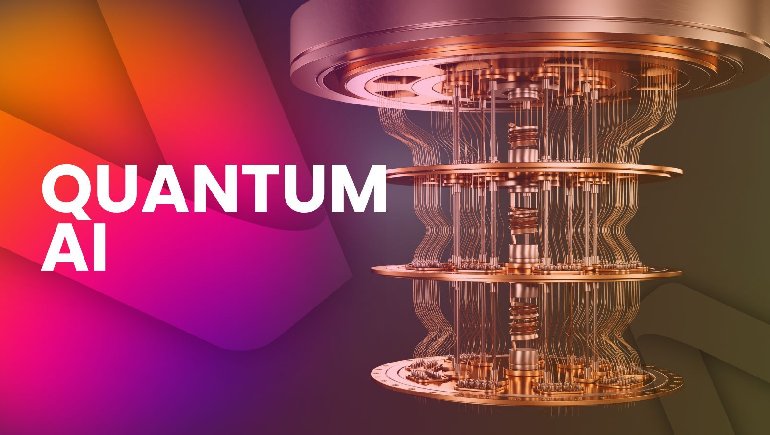
The convergence of Artificial Intelligence (AI) and Quantum Computing is rapidly becoming one of the most transformative developments in modern science and technology. While AI is revolutionizing automation, data analysis, and decision-making, quantum computing promises computational power far beyond the capabilities of classical computers. Together, these technologies are expected to redefine industries ranging from healthcare and cybersecurity to finance and materials science.
Researchers and technology leaders increasingly view AI and quantum computing as complementary fields. AI can help solve many of quantum computing’s most difficult engineering challenges, while quantum computing may eventually accelerate AI algorithms and enable entirely new computational models.
Quantum computing is based on the principles of quantum mechanics. Unlike classical computers, which process information using binary bits (0 or 1), quantum computers use quantum bits, or qubits. Qubits can exist in multiple states simultaneously through a phenomenon known as superposition.
Another critical principle is entanglement, where qubits become interconnected so that the state of one instantly affects another, regardless of distance. These unique properties allow quantum computers to solve certain complex problems exponentially faster than traditional systems.
Quantum computing has the potential to transform:
However, current quantum systems remain highly unstable and vulnerable to environmental noise, making large-scale practical deployment extremely difficult.
AI is now playing a central role in overcoming the limitations of quantum computing. Machine learning algorithms, neural networks, and reinforcement learning models are helping researchers improve the design, control, and scalability of quantum systems.
One of the greatest challenges in quantum computing is error correction. Qubits are extremely fragile and can lose information through decoherence and noise.
AI-driven systems are being used to:
Recent studies show that machine learning techniques outperform many traditional error-correction methods in noisy quantum systems.
This is considered essential for achieving fault-tolerant quantum computing, a milestone required for practical commercial applications.
AI is also helping scientists design better quantum hardware. Quantum devices involve highly complex architectures that are difficult to optimize manually.
Machine learning models can analyze enormous datasets generated by quantum experiments to:
Researchers describe AI-assisted automation as increasingly necessary for operating large-scale quantum devices.
AI and quantum computing together may dramatically accelerate scientific research.
Quantum computers can simulate molecular interactions more accurately than classical systems, while AI can analyze biological data to identify promising compounds faster.
Scientists expect AI-powered quantum simulations to help discover advanced materials for batteries, superconductors, and renewable energy systems.
Quantum-enhanced AI could improve risk analysis, portfolio optimization, and fraud detection.
Quantum systems may process complex environmental models that are currently computationally infeasible.
According to recent industry forecasts, early commercial quantum applications may emerge within the next five years in areas such as chemistry and materials science.
Quantum Machine Learning is an emerging discipline that combines quantum algorithms with AI techniques.
QML aims to improve:
Although still experimental, researchers believe QML could eventually process massive datasets far more efficiently than today’s AI systems.
Some experts predict that future AI systems may rely on hybrid architectures where classical supercomputers and quantum processors work together.
Leading technology companies and research organizations are investing billions of dollars into AI-driven quantum computing initiatives.
Recent breakthroughs include:
Technology leaders increasingly believe AI will become essential for managing future large-scale quantum infrastructure.
Quantum systems require extremely low temperatures and controlled environments. Even tiny disturbances can introduce errors.
Current quantum computers operate with relatively small numbers of stable qubits.
AI systems require enormous amounts of training data, but experimental quantum data remains scarce and expensive to generate.
Quantum computing research requires substantial investments in infrastructure, engineering, and specialized expertise.
Powerful quantum computers could eventually break many current encryption standards, creating urgent cybersecurity concerns.
The future of AI and quantum computing is highly promising. Researchers envision a new generation of “quantum supercomputers” where AI, high-performance computing, and quantum processors operate together as integrated systems.
Future developments may include:
Although fully practical quantum computing may still be years away, current advancements indicate that the fusion of AI and quantum technologies is accelerating faster than previously expected.
Artificial Intelligence for quantum computing represents one of the most significant technological frontiers of the 21st century. AI is helping solve many of quantum computing’s most difficult engineering problems, while quantum computing offers the possibility of dramatically expanding AI’s future capabilities.
Together, these technologies could revolutionize scientific discovery, industrial innovation, cybersecurity, and global computing infrastructure. While technical and economic challenges remain substantial, ongoing research and investment continue to push the boundaries of what is possible.
The coming decade is likely to witness unprecedented collaboration between AI and quantum computing, shaping the next era of technological evolution.












Comments
There are no comments for this Article.