



21 September 2026
|
8:10:45
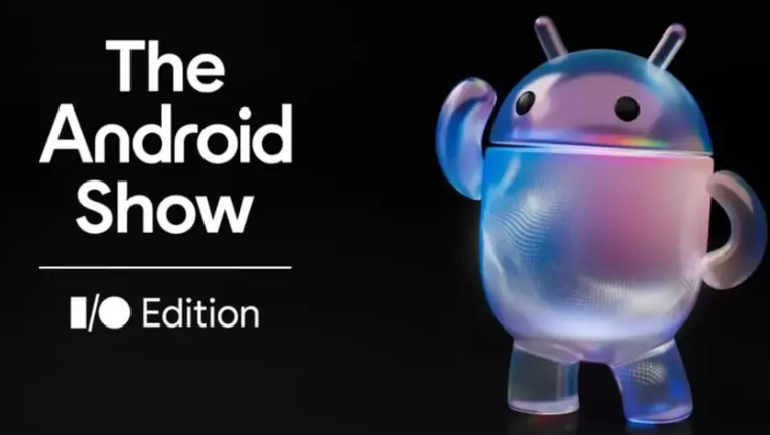
Google is officially setting the stage for a major Android-focused reveal ahead of its annual developer conference, announcing that The Android Show: I/O Edition will stream on May 12. The company is already building anticipation by calling 2026 “one of the biggest years for Android yet,” a statement that has fueled widespread speculation across the tech industry.
The event arrives just days before Google I/O 2026, which is scheduled for May 19–20. While Google I/O traditionally serves as the company’s primary platform for software, AI, and ecosystem announcements, Google appears to be continuing last year’s strategy of giving Android its own dedicated spotlight before the main keynote.
According to Google, The Android Show: I/O Edition will livestream on May 12 at 10 a.m. PT and offer an early look at the future of the Android ecosystem. The company has also confirmed that a developer-focused segment will follow the main presentation.
This marks the second consecutive year Google has separated major Android announcements from the broader Google I/O keynote. In 2025, the company used the Android-focused presentation to unveil several major platform updates, including Material 3 Expressive design language updates, Gemini integrations across Android devices, and enhancements to Wear OS and Android Auto.
By isolating Android announcements into a dedicated event, Google can provide deeper attention to its mobile operating system while reserving the larger I/O keynote for AI, cloud, developer tools, and broader ecosystem updates.
Although Google has not officially detailed the announcement lineup, industry expectations suggest that Android’s future in 2026 could revolve around three major pillars:
Several reports indicate that Android 17 could become one of the most AI-integrated versions of Android to date. Rumored features include smarter multitasking, enhanced personalization, improved privacy controls, and deeper contextual assistance powered by Gemini AI.
Analysts also expect Google to continue emphasizing ecosystem connectivity across phones, tablets, wearables, cars, TVs, and XR devices. The company’s Android XR ambitions may receive additional attention during the May presentations.
Another major topic could be the long-rumored convergence between Android and ChromeOS. While Google has not confirmed any merger plans, speculation around tighter integration between the two platforms has intensified over the past year.
While Google has remained careful not to confirm Android 17 features ahead of launch, multiple industry reports and beta findings hint at several possible additions:
Many of these features align with Google’s growing emphasis on usability, personalization, and AI-assisted interactions.
If these rumors prove accurate, Android 17 could represent the platform’s most substantial consumer-facing update in years.
One of the clearest expectations surrounding both The Android Show and Google I/O is the expanding role of Gemini AI throughout the Android ecosystem.
Over the past year, Google has aggressively integrated Gemini into smartphones, smartwatches, Android Auto, and Google TV. The company appears determined to position Android as an AI-native operating system rather than simply a mobile platform with AI features layered on top.
This shift mirrors broader industry trends as major technology companies race to redefine personal computing through generative AI assistants and contextual automation.
For Google, Android remains its most powerful consumer platform, reaching billions of devices worldwide, making it the ideal foundation for large-scale AI deployment.
Hosting The Android Show before Google I/O also serves a strategic purpose.
Separating Android announcements allows Google to avoid overcrowding the main keynote while maintaining momentum across multiple news cycles. It also gives Android-specific developments more dedicated media attention instead of competing with broader AI announcements during I/O week.
The strategy appears increasingly important as Google’s product ecosystem grows more complex, spanning AI infrastructure, consumer hardware, XR, developer tools, and cloud services.
Google’s decision to host The Android Show: I/O Edition on May 12 signals that Android is entering another major transition phase. Between AI integration, ecosystem expansion, and possible platform redesigns, the company is clearly positioning 2026 as a pivotal year for its mobile operating system.
Whether the announcements center on Android 17, Gemini-powered experiences, XR devices, or cross-platform integration, one thing is already clear: Google wants Android to remain at the center of the next generation of computing experiences.
The full picture will begin unfolding on May 12 — one week before Google I/O officially begins.









Comments
There are no comments for this Article.