




04 August 2026
|
8:10:45
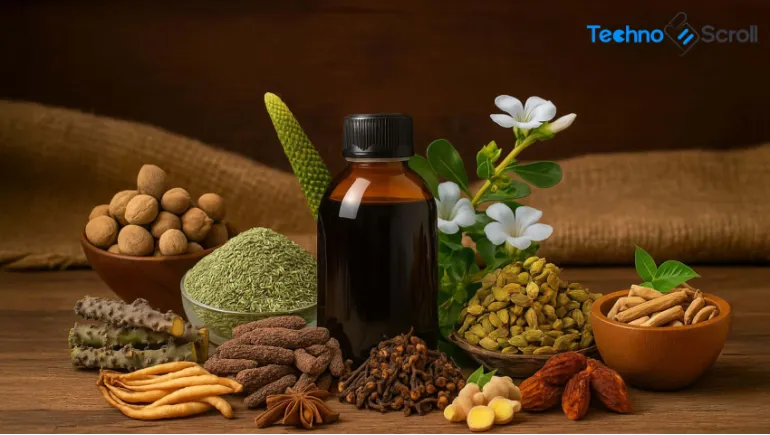
For thousands of years, Ayurveda, the traditional system of medicine originating in India, has emphasized the connection between diet, herbs, and mental clarity. While modern neuroscience continues to explore these ancient practices, a growing body of research suggests that certain Ayurvedic herbs for brain health contain compounds worth understanding. This guide explores five well-studied herbs and spices, the science behind their reputation, and how to incorporate them thoughtfully into your daily routine.
Before we begin, an important note: the herbs discussed here are not a substitute for medical treatment, and anyone with existing health conditions or taking medications should consult a healthcare provider before adding new supplements to their routine.
Ayurveda views the brain and nervous system through the lens of balance rather than isolated function. Practitioners traditionally use specific herbs to support what they describe as Medhya qualities, those that nourish intellect, memory, and mental clarity. Modern research has begun examining these traditional claims through clinical trials, and several herbs have shown genuinely promising results for cognitive health and memory improvement.
It's worth noting that while preliminary studies are encouraging, most research on these herbs remains limited in scale, and results don't always translate directly to guaranteed outcomes for every individual. With that context in mind, let's explore the herbs themselves.
Ashwagandha ranks among the most extensively studied Ayurvedic herbs for memory and stress reduction. Classified as an adaptogen, this root has been used in traditional practice for centuries to help the body manage stress while supporting overall vitality.
Several clinical studies have examined ashwagandha's effects on cognitive function, memory, and reaction time. Research published in peer-reviewed journals has found associations between ashwagandha supplementation and improvements in immediate and general memory, particularly in adults experiencing mild cognitive concerns. Researchers believe its stress-reducing properties may play a role here, since chronic stress and elevated cortisol levels are known to negatively affect memory formation and recall.
Ashwagandha is commonly available as a powder, capsule, or tincture. Traditional preparations often mix the powder into warm milk or water, typically taken in the evening due to its calming properties. Standard doses in studies have ranged from 300-600mg of standardized extract daily, though individual needs vary considerably.
Often called the quintessential brain-boosting herb in Ayurvedic tradition, Brahmi has a reputation specifically tied to memory enhancement and learning capacity. This creeping, aquatic plant has been used in Ayurvedic medicine for over 3,000 years, primarily to support cognitive function and reduce anxiety.
Bacopa monnieri is one of the more rigorously studied herbs in this category. Multiple randomized controlled trials have investigated its effects on memory acquisition and retention. Findings generally suggest that consistent supplementation over 8-12 weeks may support improved memory retention and information processing speed, though effects tend to build gradually rather than appearing immediately.
The compounds responsible, called bacosides, are believed to support nerve communication by helping repair damaged neurons and enhancing the transmission of nerve impulses, though researchers note more studies are needed to fully understand these mechanisms in humans.
Brahmi is typically consumed as a standardized extract in capsule form, since the raw herb has a notably bitter taste that many people find difficult to tolerate directly. Traditional Ayurvedic preparations sometimes combine it with ghee or honey to improve palatability and, according to Ayurvedic theory, enhance absorption.
While widely recognized as a kitchen spice, turmeric has earned attention among Ayurvedic spices for brain health due to curcumin, its primary active compound. Curcumin has become one of the most researched natural compounds in relation to brain aging and neuroprotection.
Studies have examined curcumin's antioxidant and anti-inflammatory properties, both of which are relevant to brain health since chronic inflammation and oxidative stress are associated with cognitive decline over time. Some research has explored curcumin's potential relationship to brain-derived neurotrophic factor (BDNF), a protein involved in the growth and maintenance of neurons, though this area of study remains ongoing.
A notable challenge with turmeric is bioavailability, curcumin is poorly absorbed by the body on its own. This is why many formulations combine turmeric with black pepper extract (piperine), which studies suggest can significantly enhance absorption.
Adding turmeric to cooking, particularly in dishes containing healthy fats, provides a simple way to incorporate it into your diet. For those seeking more concentrated effects, standardized curcumin supplements combined with piperine are widely available, though appropriate dosing should be discussed with a healthcare provider.
Known in Ayurvedic tradition as a herb that supports mental clarity and longevity, Gotu Kola has been used historically to promote circulation and support cognitive function, particularly related to focus and mental fatigue.
Preliminary research suggests Gotu Kola may support healthy blood circulation, including cerebral blood flow, which is essential for delivering oxygen and nutrients to brain tissue. Some smaller studies have explored its potential role in supporting mood and reducing anxiety, both of which indirectly influence mental clarity and focus. However, compared to Ashwagandha and Brahmi, the clinical research base for Gotu Kola remains smaller, and more robust studies are needed to confirm these effects.
Gotu Kola is available as dried leaf tea, powder, or capsule form. Traditional practice often involves brewing the dried leaves into tea, consumed once or twice daily.
Less internationally recognized than the previous herbs but highly regarded within Ayurvedic tradition, Shankhpushpi has historically been used specifically for supporting memory, learning capacity, and calming an overactive mind.
Ayurvedic practitioners have traditionally recommended Shankhpushpi for students and individuals experiencing mental fatigue or difficulty concentrating. While Western scientific literature on this herb remains more limited than for Ashwagandha or Brahmi, some animal studies have suggested potential neuroprotective properties, and it continues to be an active area of research interest.
Shankhpushpi is commonly prepared as a syrup, powder, or capsule, often taken alongside other Ayurvedic herbs for focus and mental clarity as part of a broader herbal formulation rather than in isolation.
Natural herbs for cognitive health work best as part of a broader lifestyle approach rather than as standalone solutions. Consider these complementary practices:
While these evidence-based Ayurvedic herbs show genuine promise, a few practical points deserve attention. Herbal supplements aren't regulated with the same rigor as pharmaceuticals in most countries, so sourcing from reputable, third-party-tested brands matters significantly. Additionally, some of these herbs can interact with medications; Ashwagandha, for instance, may affect thyroid medication and sedatives, while turmeric can interact with blood thinners.
Pregnant or breastfeeding individuals, those with autoimmune conditions, or anyone managing chronic illness should consult a qualified healthcare provider before beginning supplementation.












Comments
There are no comments for this Article.