




27 October 2026
|
8:10:45

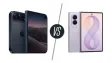
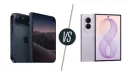
Xiaomi has just unveiled the Xiaomi 18 Fold, alongside its new flagship tablet, the Xiaomi Pad 9 Pro Max. Both devices run on Xiaomi's latest in-house chip, the XRING O3. If you're tracking the best Xiaomi foldable phone options for 2026, this launch changes the conversation. The Xiaomi 18 Fold isn't just a bigger phone that folds in half. It's Xiaomi's first mid-size foldable, built to solve the two biggest complaints people have about foldables: they're too bulky to carry and too fragile to trust.
This article breaks down the Xiaomi 18 Fold specifications, its design, performance, camera system, and how it compares to a standard flagship phone. By the end, you'll know exactly who this phone is for.
The Xiaomi 18 Fold is designed around a simple idea: a foldable should feel like a normal phone when closed, and a small tablet when open. Folded, it measures just 117.8 × 83.6 mm, close to the size of a passport. Unfolded, it opens into a 7.58-inch display with a 5.02mm profile, making it one of the thinnest large foldables on the market. At 219g, it's lighter than every previous Xiaomi foldable.
Both the inner and outer screens share the same √2:1 aspect ratio, the same ratio used by standard A4 paper. This matters more than it sounds. Most foldables force you to adapt content between two different screen shapes. Here, video, photos, and documents scale naturally between the cover display and the main screen, so switching from one-handed use to full-screen viewing feels seamless rather than jarring.
The 5.38-inch cover display is sized for real one-handed use typing, swiping down notifications, and back gestures all work without needing to unfold the phone. Powered by Xiaomi HyperOS, the unfolded display supports two-way and three-way split screens, letting you run multiple apps side by side in layouts close to a full-size smartphone screen.
Durability has always been the weak point of foldable phones, and Xiaomi has clearly designed around that criticism. The frame uses 7000-series aluminum alloy, and both the outer display and back panel are protected by Xiaomi Shield Glass 3.0, reinforced through ion implantation for better drop resistance. The hinge uses a new three-link design that wraps around the screen for added protection while freeing up more space for the display itself.
Internally, the phone uses a dual-layer Ultra Thin Glass (UTG) structure: a 50μm layer paired with a 30μm support layer, along with a new stretchable organic film in the touch layer. Together, these upgrades give Xiaomi 18 Fold 258% higher inner display impact resistance than its predecessor and support for drops from up to 1.2 meters. The display also stays flatter over time, with an average crease depth under 30μm, which should reduce the visible fold line that affects most foldable phones after months of use.
For anyone who has hesitated to buy a foldable because of durability concerns, this is the strongest argument Xiaomi has made yet.
The Xiaomi 18 Fold XRING O3 pairing is central to this launch. XRING O3 is Xiaomi's second fully in-house SoC, built on a 3nm process with 24 billion transistors, up from 19 billion in the previous generation. It uses a 10-core all-big-core CPU (two Ultra cores, four Premium cores, four Pro cores), delivering 60% higher performance and 25% lower power consumption than before.
On the graphics side, the new 16-core G2-Ultra NX GPU boosts performance by 85% while cutting power consumption by 64%. XRING O3 is also the first chip to support LPDDR6 RAM, reaching data rates up to 10,667 Mbps and 113.8 GB/s of memory bandwidth, nearly 50% higher than LPDDR5X.
AI performance gets a dedicated boost too. The new quad-core NPU, built on SIMT architecture, delivers 200 TOPS of tensor performance and 3.13 TFLOPS of vector performance. Combined with Xiaomi MiMo's five-value quantization technology, on-device AI decoding is 45% faster than the previous flagship chip. In practical terms, this means smoother multitasking, better thermal control during gaming, and longer battery life during video playback all common pain points for large-screen foldables.
Foldable phones often cut corners on camera hardware to save space. The Xiaomi 18 Fold doesn't. It uses a 200MP Leica triple-camera system led by a flagship HP5 1/1.56-inch main sensor with native HDR and in-sensor lossless zoom.
The standout is the 50MP Leica periscope telephoto camera. Its inverted design keeps the module compact while producing smooth, naturally rounded bokeh ideal for portraits at its native 80mm focal length. With in-sensor zoom, it extends to 160mm without losing image quality, making it just as capable for landscape shots. This is a camera system built for people who take photography seriously, not just a checkbox spec.
Xiaomi 18 Fold is the first foldable to use HyperRGB panels on both its inner and outer displays, giving full use of red, green, and blue subpixels for sharper, more accurate color. Both screens are rated as Super Sunlight Displays, reaching up to 4,000 nits of peak brightness with a 1–120Hz LTPO adaptive refresh rate, so visibility stays strong even in direct sunlight.
Battery life is backed by a 6000mAh silicon-carbon battery, the largest in its form factor. The cells use a high silicon content stacking process for higher energy density, and the phone supports 67W wired and 50W wireless HyperCharge. For connectivity, it includes Xiaomi Astral Communication for global roaming across 210+ countries and 52+ carriers, plus Wi-Fi 7 and UWB support.
Xiaomi is also offering a Ceramic Edition of the 18 Fold, using silicon nitride ceramic on the back panel a first for any smartphone. Silicon nitride is typically used in automotive and aircraft engines for its heat resistance. On a phone, it delivers a warm, smooth feel with high hardness, while weighing about 50% less than traditional zirconia ceramic. It's a small detail, but it signals how much attention Xiaomi has put into material choice, not just specs.
Launched alongside the phone, the Xiaomi Pad 9 Pro Max targets professionals who need a large-screen device for real work, not just media consumption. It features a 13.3-inch 3.4K display (3408 × 2272) with a 144Hz refresh rate and up to 1,000 nits of brightness. A professional original color mode and multi-screen color consistency make it suitable for color-sensitive creative work.
It runs on the same XRING O3 chip, scoring over 5.61 million on AnTuTu a 54% CPU and 85% GPU improvement over tablets using the previous XRING O1. A 12000mAh battery with 120W HyperCharge supports long work sessions, and a new DP-in video input supports up to 3.4K at 120Hz over USB-C, useful for creative or gaming setups that need an external display input.
| Display (main) | 7.58" LTPO AMOLED, 120Hz, 4,000 nits peak, 2364×1672 |
|---|---|
| Display (cover) | 5.38" LTPO AMOLED, 120Hz, 4,000 nits peak, 1168×1712 |
| OS | Android 17, HyperOS 4 |
| Chipset | Xiaomi XRING O3 (3nm), 10-core, 4.35GHz |
| GPU | Arm G2-Ultra NX MC16 |
| RAM / Storage | 12GB/256GB, 12GB/512GB, 16GB/512GB, 16GB/1TB (UFS 4.1) |
| Main camera | 200MP main (f/1.7, OIS) + 50MP telephoto (3x optical) + 50MP ultrawide |
| Selfie camera | 16MP (main and cover) |
| Battery | 6000mAh Si/C, 67W wired, 50W wireless |
| Body | 219g, 5.0mm unfolded / 10.7mm folded |
| Protection | IP58/IP59 |
| Connectivity | Wi-Fi 7, Bluetooth 6.0, UWB, NFC, dual Nano-SIM |
The Xiaomi 18 Fold is aimed at people who want the productivity of a tablet-size screen without giving up daily usability. If you've avoided foldables because they felt fragile or oversized, the improved hinge durability, lighter build, and passport-sized closed form directly address that hesitation. The Leica camera system also means you're not sacrificing photo quality for the folding design, which has historically been a trade-off with this category of phone.










Comments
There are no comments for this Article.