




Motorola just revealed its most serious flagship attempt in years, and the most interesting detail isn't the chip. It's the operating system.
Motorola unveiled the Signature 27 at Qualcomm's Snapdragon Summit on September 22, 2026, and it's a clear statement that the company wants back into the true flagship conversation. It's only the second phone in Motorola's Signature line, but it arrives with a new naming approach based on launch year, Qualcomm's newest chip, and a genuinely unusual software option that no other major Android phone offers out of the box.
Motorola hasn't announced pricing or an exact release date yet, only that the Motorola Signature 27 is expected to reach markets worldwide later in 2026. Here's everything confirmed so far, and what actually separates it from the rest of this year's flagships.
The First Non-Pixel Phone to Officially Support GrapheneOS
This is the detail that matters most if you care about privacy-focused Android. GrapheneOS is a hardened, privacy-first version of Android that has, until now, only officially supported Google's Pixel phones. According to reporting from MakeUseOf following the reveal, the Signature 27 is set to become the first non-Pixel device with official GrapheneOS support.
That's a significant shift for anyone who's wanted a hardened, de-Googled phone without being locked into Pixel hardware. It also positions the Signature 27 as something genuinely different from Samsung, Google, or any other major flagship this year, none of which offer this option out of the box.
Snapdragon 8 Elite Extreme Gen 6: A First for This Chip Class
The Signature 27 is built around Qualcomm's new Snapdragon 8 Elite Extreme Gen 6, the company's first 2-nanometer mobile chipset. Motorola says the chip delivers stronger on-device AI processing, more responsive gaming, upgraded camera processing, and faster download speeds. According to MakeUseOf's early hands-on coverage, the Signature 27 will likely be the first phone with this chip sold in North America, a notable first for a brand that has struggled to keep pace with Samsung and Google in the US flagship market.
To keep that new chip cool under sustained load, Motorola paired it with an updated ArcticMesh cooling system built around a vapor chamber that GSMArena reports is 40 percent larger than the one in the previous Signature model.
Motorola Signature 27 Camera: A Major Telephoto Jump
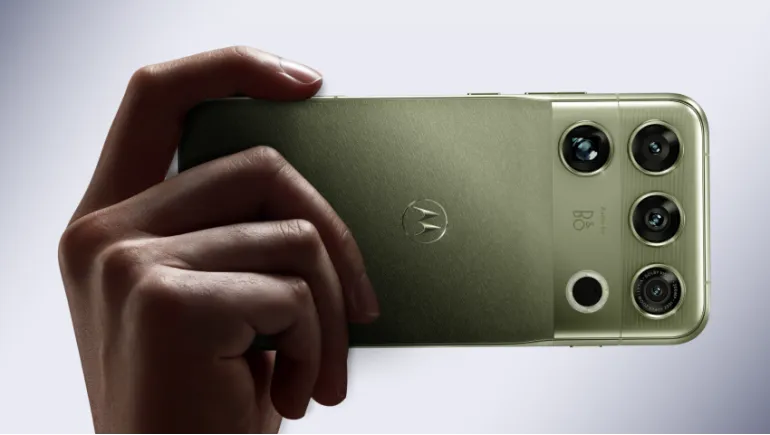
The rear camera system uses a quad-camera setup led by a 50MP Sony LYTIA 910 main sensor, which Motorola has confirmed directly. The standout change is the telephoto lens, which jumps to a 200MP sensor, a major increase from the 50MP telephoto on the previous Signature model. Motorola hasn't detailed the full camera array yet, including the ultrawide and additional sensors, so some specifics are still pending an official spec sheet.
Audio by Bang & Olufsen: A New Long-Term Partnership
Motorola recently announced a long-term collaboration with audio brand Bang & Olufsen, and the Signature 27 is the first device to carry the result, branded Audio by B&O. This pairs with the Signature 27's overall premium positioning, alongside a textured, furniture-like design that multiple outlets specifically called out as a refreshing departure from typical glass-slab flagship design.
AI Features: Gemini, Omni, and Lyria
The Signature 27 leans heavily on Google's Gemini ecosystem for on-device AI. Engadget's coverage of the reveal specifically names access to Omni, a video generation tool, and Lyria, a music generation tool, both Gemini-adjacent AI features built into the phone's software experience. Combined with the new chip's AI processing improvements, Motorola is positioning generative AI as a core part of the Signature 27's everyday use, not just a marketing checkbox.
Design and Software: Built for the Long Haul
The Signature 27 launches in two colorways, Pantone Coal Smoke and Pantone Capulet Olive, both featuring a distinct textured finish on the rear panel. It runs Android 17 out of the box, and Motorola has committed to seven years of OS upgrades, a meaningful jump from the software support many Android phones still offer and a direct answer to a long-standing criticism of past Motorola flagships. One additional hardware detail worth noting: coverage from Android Central highlights a new six-antenna layout, aimed at improving connectivity and signal reliability compared to previous Motorola devices.
Motorola Signature 27 vs. Other Flagship Phones
Early coverage has directly framed the Signature 27 as a likely competitor to phones like the Samsung Galaxy S26 Ultra and the upcoming Galaxy S27 Ultra, based on its chip class, camera ambitions, and premium pricing tier. What separates it isn't raw specs alone, since most 2026 flagships will offer similarly capable chips and cameras. It's the combination of official GrapheneOS support, a genuine audio partnership rather than a licensed logo, and a design language that intentionally avoids looking like every other glass-and-metal slab on the market.
What's Still Unconfirmed
Motorola has not announced pricing, an exact release date, or a complete spec sheet. Several unofficial preliminary listings have circulated with details like display size, battery capacity, and storage tiers, but these figures vary across sources and Motorola has not confirmed them directly, so they should be treated as unverified until Motorola publishes an official specification page. For context, the previous Signature model launched in the $800 to $1,200 range depending on configuration, though there's no guarantee the Signature 27 will follow the same pricing pattern given its higher-tier chip and camera upgrades.
Is the Motorola Signature 27 Worth Waiting For?
If privacy-focused software is a priority for you, the Signature 27 is worth watching closely, since official GrapheneOS support on non-Pixel hardware is a genuine first, not an incremental feature. If you care most about raw performance, you're getting Qualcomm's newest and most advanced chip on a phone built specifically to cool it properly. And if you've written Motorola off as a mid-range brand, this is the clearest signal yet that the company is serious about competing at the true flagship tier again, seven-year OS support and premium audio partnership included.
The honest caveat is timing. With no price and no confirmed release date, this is a phone to watch rather than one to plan a purchase around just yet. Anyone deciding between the Signature 27 and an already-available flagship should wait for Motorola's official specification sheet and firm launch details before making a final call.











Comments
There are no comments for this Article.