




09 October 2026
|
8:10:45
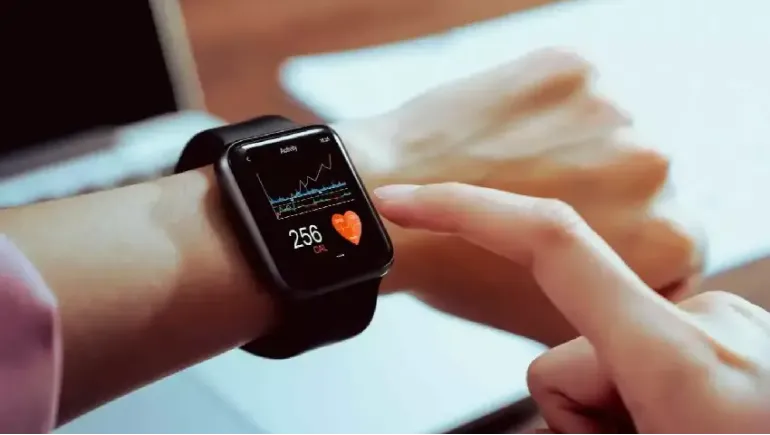
With the launch of the Apple Watch Series 11, Apple has doubled down on its mission to transform the world’s most popular wearable into what it calls the "ultimate device for a healthy life". While previous iterations established the watch as a fitness companion, the Series 11 moves aggressively into the realm of proactive medical screening, targeting chronic conditions like hypertension and sleep apnea. However, as the technology becomes more sophisticated, understanding the scientific nuances behind these sensors is more important than ever.
The Series 11 is powered by the S10 chip, featuring a 64-bit dual-core processor and a 4-core Neural Engine. For the first time, cellular models support 5G connectivity, offering faster throughput and significantly increased signal strength in weak coverage areas by simultaneously engaging two system antennas.
Durability has also seen a boost; the aluminum models feature an Ion-X front crystal with 2x better scratch resistance thanks to a new Apple-designed ceramic coating, while titanium models continue to utilize sapphire crystal. Perhaps most critical for health monitoring is the improved battery life, which now offers up to 24 hours of normal use, up from the 18 hours standard in previous generations. This allows for more consistent overnight tracking, supported by fast-charging capabilities that provide eight hours of sleep tracking in just five minutes.
The headline feature of the Series 11 is its ability to detect signs of hypertension, or chronic high blood pressure. High blood pressure is often undiagnosed because it rarely presents symptoms, yet it remains a leading cause of heart attack and stroke.
Apple’s approach is unique: rather than using a traditional inflating cuff, the watch uses its optical heart sensor to perform a passive, background analysis of how blood vessels respond to the heart's beats. This machine learning-based algorithm reviews data over discrete 30-day intervals. It is intended for users 22 years or older who have not been previously diagnosed.
However, scientific validation studies offer a clear view of the tool's limitations. In Apple’s pivotal clinical study of 1,863 participants, the feature showed an overall specificity of 92.3%, which rose to 95.3% for those with normal blood pressure. This means it is highly effective at avoiding false alarms. Conversely, the overall sensitivity was 41.2%, though it improved to 53.7% for the more severe Stage 2 hypertension. Independent researchers note that while the watch is excellent for "ruling in" a potential problem, it misses about 60% of cases, meaning a lack of notification does not necessarily mean a user has normal blood pressure. If a user is notified, Apple recommends taking blood pressure readings with a traditional cuff for seven days to provide a doctor with actionable data.
The Series 11 introduces a comprehensive suite of sleep tools, including the Sleep Apnea Notifications Feature. Sleep apnea involves repeated breathing disruptions that can lead to serious health issues if untreated. The watch uses its accelerometer to monitor for "breathing disturbances" while the user sleeps. If these disturbances are consistently categorized as "Elevated" over a 30-day period, the user receives a notification. To use this, you must wear the watch to sleep for at least 10 nights within a 30-day window.
Complementing this is the Sleep Score, which provides a holistic look at sleep quality. This score is calculated based on sleep duration, bedtime consistency, how often you wake up, and time spent in REM, Core, and Deep sleep stages. By breaking down these components, the watch helps users identify exactly what they need to prioritize to achieve more restorative rest.
For users who want a daily "check-up," the Vitals app serves as a centralized dashboard for overnight health metrics. It tracks heart rate, respiratory rate, wrist temperature, and sleep duration to establish a "typical range" for each user. If two or more of these metrics fall outside that range, the watch sends a notification.
These notifications are paired with context, helping users understand if a deviation might be caused by factors like medication, elevation changes, or an impending illness. It is a powerful tool for longitudinal health tracking, though Apple notes that the back of the watch needs consistent skin contact—not too tight, but not too loose—for these sensors to function accurately.
While the Apple Watch is a leader in consumer health, scientific validation studies highlight areas where users should remain cautious, specifically regarding Heart Rate Variability (HRV). HRV is a vital marker of stress and recovery, but research has shown that the Apple Watch tends to underestimate HRV by an average of 8 milliseconds, with a mean absolute percentage error of 29%.
A significant point of contention among researchers is Apple’s methodology. Most competitors use RMSSD (root mean square of successive differences), while Apple utilizes SDNN (standard deviation of normal-to-normal measurements). Furthermore, Apple calculates an average HRV over 24 hours rather than just during sleep. Because HRV is highly sensitive to posture, activity, and caffeine, some scientists argue that a 24-hour average can result in "noisy" data that may be less precise than measurements taken with a clinical-grade chest strap monitor.
For years, rumors have swirled about a "Holy Grail" feature: non-invasive glucose monitoring. This project, which originated in the Steve Jobs era, aims to use silicon photonics chips and lasers to measure blood sugar through the skin using optical absorption spectroscopy.
Despite over 15 years of work, reports indicate this feature remains "many years away". While Apple reached a "proof-of-concept" stage in 2023 with a functional prototype, the hardware is currently far too large to fit into an Apple Watch. Engineering a sensor that is non-invasive, clinically accurate, and small enough for the wrist has been compared to the "Apollo program" in terms of its technical difficulty.
The Apple Watch Series 11 earns its status as the "ultimate device for a healthy life" because it leverages its unique position on the user's wrist to provide meaningful health insights that other devices cannot. By serving as an intelligent guardian, the watch bridges the gap between casual activity tracking and proactive medical awareness, potentially improving diagnosis rates and longevity for those with silent conditions like hypertension. While it is not a replacement for professional clinical equipment, its ability to accurately monitor heart rate and calorie expenditure, combined with advanced safety features like Crash Detection, empowers users to stay active, healthy, and safe. Ultimately, the Series 11 represents a significant leap toward a future where our devices don't just count our steps, but actively work to protect our lives.











Comments
There are no comments for this Article.