




29 July 2026
|
8:10:45
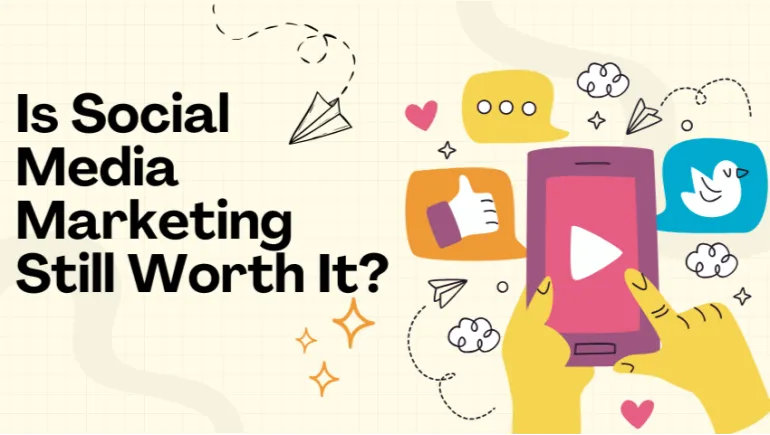
The digital landscape has undergone a dramatic transformation over the past few years, leaving many business owners questioning whether social media marketing remains worthwhile in 2026. With algorithm changes, rising ad costs, and shifting user behaviors, it's a fair question that deserves a thorough, data-driven answer. Let's examine the current state of social media marketing and help you make an informed decision for your business.
Social media marketing remains one of the most powerful tools in a business's digital arsenal, but the landscape looks considerably different than it did even two years ago. As of 2026, platforms like Facebook have surpassed 3 billion users globally, while TikTok, Instagram, and LinkedIn continue to expand their reach and influence.
However, growth in user numbers doesn't automatically translate to marketing success. The real question isn't whether people use social media; they clearly do. But the question is whether businesses can effectively reach and convert their target audiences through these platforms.
When evaluating digital marketing ROI, social media presents a mixed but ultimately positive picture. Recent studies indicate that businesses investing strategically in social media see an average return of $5.60 for every dollar spent on advertising. However, this figure varies significantly based on industry, target audience, platform choice, and execution quality.
Is social media marketing effective for your business? The answer depends on several factors:
Social media ads ROI has evolved considerably. While cost-per-click rates have increased on major platforms, targeting capabilities have become more sophisticated. Meta's AI-powered advertising tools, TikTok's algorithm-driven placements, and LinkedIn's B2B targeting options deliver increasingly precise audience matching.
Businesses that once spent $500 monthly on Facebook ads might now need $800-1,200 for comparable reach, but the quality of leads has generally improved thanks to better targeting technology.
Organic reach in 2026 presents the biggest challenge for social media marketers. Platform algorithms increasingly prioritize paid content and creator-generated material over traditional business posts. Organic reach for business pages on Facebook has declined to approximately 2-5% of followers, while Instagram hovers around 10-15%.
This doesn't mean organic social media is dead it means businesses must adapt their strategies. Authentic storytelling, video content, interactive features, and community engagement now matter more than ever.
Does social media marketing work for small business owners with limited budgets? Absolutely, but success requires a smart strategy over simply throwing money at ads.
Small businesses in markets like Social media marketing Bangladesh 2026 or SMM Dhaka are finding success by:
The democratization of content creation tools means small businesses can produce professional-quality content without expensive equipment or agencies. Smartphone cameras, free editing apps, and platform-native tools level the playing field considerably.
AI social media marketing has transformed from experimental technology to essential infrastructure. Businesses now leverage AI for:
Social media automation 2026 tools handle repetitive tasks, freeing marketers to focus on strategy, creativity, and relationship building. However, over-automation risks creating impersonal brand experiences, so balance remains crucial.
Social media trends 2026 reveal where the industry is heading:
Creator monetization strategies have blurred the lines between influencer marketing and traditional advertising. Brands increasingly partner with micro-influencers and niche creators who maintain authentic connections with specific audiences. These partnerships often deliver higher engagement and conversion rates than traditional advertising.
Short-form video dominates user attention across all major platforms. Businesses that haven't embraced video content risk becoming invisible. Live streaming, Stories, Reels, and TikTok-style content drive significantly higher engagement than static images or text posts.
A successful social media strategy in 2026 prioritizes community over audience. Brands create spaces for customers to connect, not just consume marketing messages. Facebook Groups, Discord servers, and platform-specific community features foster loyalty and organic advocacy.
Increasing privacy regulations and user awareness mean marketers must build trust through transparency. First-party data collection, permission-based marketing, and clear value exchanges replace the tracking-heavy approaches of previous years.
To maximize digital marketing effectiveness through social media, businesses should:









Comments
There are no comments for this Article.