




07 October 2026
|
8:10:45
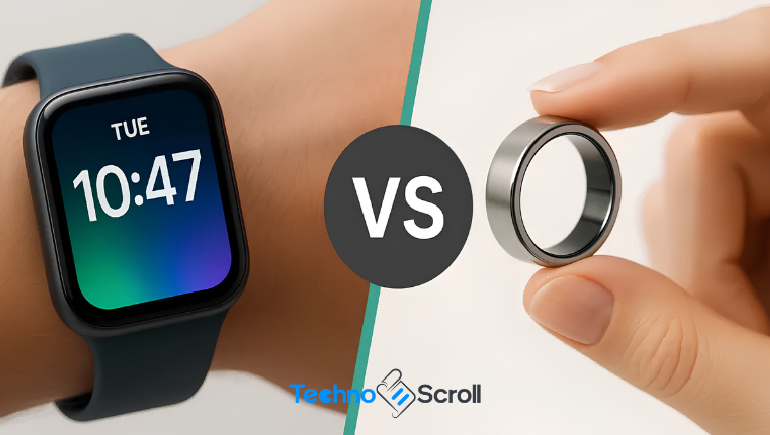
Wearable technology has evolved rapidly over the past decade, moving from basic step counters into full-scale health and communication ecosystems. Smartwatches, led by devices such as the Apple Watch, Fitbit, and Garmin series, currently dominate the market by combining fitness tracking, notifications, apps, and real-time interaction in a single wrist-worn device. However, a new category is gaining momentum: smart rings. As 2026 approaches, a key question emerges in the tech industry, could smart rings eventually replace smartwatches, or will they remain a supporting companion technology?
Smart rings are no longer experimental concepts confined to niche wellness markets. Products such as the Oura Ring and the emerging Samsung Galaxy Ring demonstrate how far miniaturized wearable technology has progressed. These devices focus less on interaction and more on continuous, passive data collection. Instead of acting as mini smartphones, smart rings quietly monitor health metrics such as heart rate, heart rate variability, skin temperature, and sleep cycles.
Their appeal lies in simplicity. Users do not need to interact with screens or manage notifications. Instead, the device works in the background, collecting biometric data and delivering insights through a connected smartphone app. This makes smart rings particularly attractive to users who prioritize health tracking over digital engagement.
Despite the rise of smart rings, smartwatches remain far more versatile and powerful as general-purpose wearable devices. Platforms such as the Apple Watch, Fitbit devices, and Garmin smartwatches continue to lead because they function as full interactive extensions of smartphones.
Smartwatches allow users to receive and respond to messages, run applications, track workouts in real time, use GPS navigation, and even make payments. These capabilities depend on hardware elements such as high-resolution displays, advanced processors, and multi-sensor systems—components that cannot realistically be integrated into a ring-sized device. This makes smartwatches essential for users who need active interaction and real-time feedback.
Smart rings offer several advantages that make them increasingly appealing in the wearable market. Their compact and lightweight design makes them significantly more comfortable than watches, especially for 24/7 wear. Many users find them easier to wear during sleep, which improves the consistency of health data collection.
Sleep tracking is one of the strongest use cases for smart rings. Because the device remains stable on the finger and avoids wrist movement interference, it can capture reliable biometric signals throughout the night. Additionally, smart rings generally consume far less power than smartwatches, as they do not require displays or complex operating systems. This allows them to achieve significantly longer battery life, sometimes lasting several days or even weeks depending on usage.
Despite their strengths, smart rings have clear limitations that prevent them from replacing smartwatches. The most important limitation is the absence of a display, which eliminates any form of direct interaction. Users must rely entirely on smartphones to view insights or control settings, which reduces the independence of the device.
Smart rings also lack the processing power and sensor complexity required for advanced fitness features. Real-time GPS tracking, workout mapping, and interactive coaching are simply not feasible in such a small form factor. As a result, smart rings are better suited for passive monitoring rather than active engagement.
Looking ahead to 2026, the wearable market is likely to become more specialized rather than unified under a single dominant device type. Smart rings are expected to strengthen their position in the health and wellness segment, particularly in sleep tracking, recovery analysis, and long-term biometric monitoring. At the same time, smartwatches will continue to evolve as interactive hubs for communication, fitness tracking, and productivity.
Rather than competing directly, these devices are increasingly forming a layered ecosystem. Some users may choose to wear both a ring and a watch, using each for its strengths, rings for passive health tracking and watches for active interaction.
Looking toward 2026, wearable technology is expected to evolve through specialization rather than replacement. Smart rings, such as the Oura Ring and Samsung Galaxy Ring, will continue focusing on passive health tracking like sleep, recovery, and biometric monitoring, while smartwatches such as the Apple Watch and Garmin smartwatches will remain dominant for real-time interaction, fitness tracking, and digital communication. Instead of one replacing the other, both will coexist in a layered ecosystem where each device serves a distinct purpose in everyday life.










Comments
There are no comments for this Article.