




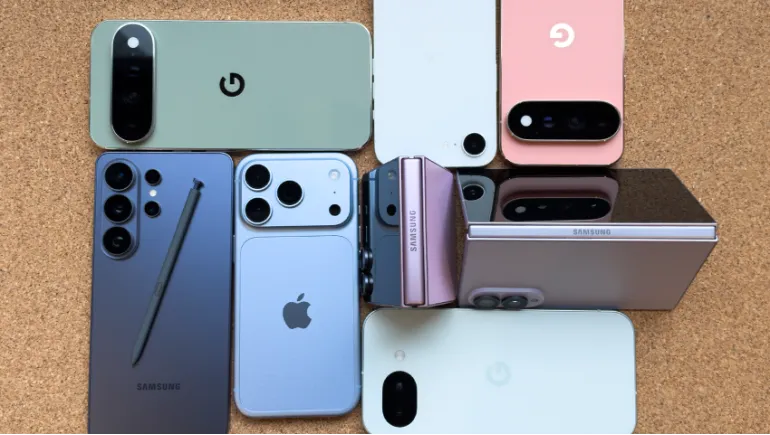
Spec sheets have never been longer or harder to compare. Answer these eight questions first, and the right phone becomes obvious.
Buying a phone in 2026 means wading through chipsets, camera sensors, AI features, and marketing terms that change every few months. Flagship phones now cost well over $1,000, and the gap between a smart purchase and an expensive mistake usually comes down to whether you asked the right questions before you paid, not after.
This guide walks through the eight questions that actually matter. Answer them honestly based on how you use your phone, and you'll know exactly what to look for before you ever walk into a store or open a checkout page.
1. How Long Do You Actually Keep a Phone?
This single question shapes almost every other decision on this list. If you upgrade every year or two, you can prioritize today's best price-to-performance ratio and worry less about long-term support. If you plan to keep your phone for four or five years, that changes what counts as "good enough" hardware, and it makes one spec far more important than most buyers realize: software updates.
Why Software Updates Matter More Than Ever
Several manufacturers now commit to seven or more years of OS and security updates on their flagship phones, a meaningful jump from the three-to-four-year support window that was standard just a few years ago. A phone with weaker hardware but a long update commitment can easily outlast a more powerful phone that stops receiving security patches after three years. Check the manufacturer's stated update policy before you buy, not after.
2. What Will You Actually Use the Camera For?
Megapixel counts get the headlines, but they're among the least useful numbers on a spec sheet on their own. A 200MP main sensor paired with poor processing can underperform a well-tuned 50MP sensor in real-world photos. What matters more is whether the camera system fits how you actually shoot.
If you photograph people and pets in motion, prioritize optical image stabilization and a wide aperture, since both directly improve low-light and action shots. If you shoot landscapes or architecture, an ultrawide lens with minimal distortion matters more than raw zoom range. If you're drawn to distant subjects, like wildlife or sports from the stands, look specifically for a periscope telephoto lens with real optical zoom, not just digital cropping marketed as "zoom."
3. Which Chipset Actually Fits Your Workload?
The processor, or chipset, determines how smoothly your phone handles everything from everyday multitasking to gaming and on-device AI features. In 2026, flagship phones increasingly run on chips built with more advanced manufacturing processes measured in nanometers, where a smaller number generally means better performance per watt.
You don't need to memorize benchmark scores to shop smart here. If you game heavily or edit video on your phone, prioritize a flagship-tier chipset with strong sustained performance, meaning it doesn't slow down significantly during long sessions. If you mainly browse, message, and stream, a mid-range chipset paired with enough RAM will feel just as smooth for your day-to-day use, often at a significantly lower price.
4. Is 8GB of RAM Still Enough?
RAM determines how many apps your phone can keep active in the background without reloading them. For light users, 8GB is still workable in 2026, though it's increasingly treated as an entry-level figure rather than a comfortable standard. If you multitask heavily, keep many browser tabs open, or use on-device AI features that run locally rather than in the cloud, 12GB or more gives you noticeably more headroom and a longer comfortable lifespan before the phone starts to feel sluggish.
5. How Much Internal Storage Do You Really Need?
Most current flagships have dropped expandable microSD storage entirely, which makes your initial storage choice more permanent than it used to be. 128GB is now considered the low end for most users, particularly if you shoot photos and video regularly or keep offline media for travel. If you record a lot of 4K video, download games locally, or rarely clear out old files, 256GB or higher is the safer starting point, since you can't add more later.
6. What Display Specs Actually Affect Daily Use?
Display marketing throws around a lot of numbers, but a few matter far more than others for everyday use. An AMOLED panel generally delivers deeper blacks and better contrast than an LCD screen, which noticeably improves everything from photos to dark-mode interfaces. Refresh rate, measured in Hz, affects how smooth scrolling and animations feel; 120Hz is now common even outside flagship phones and is worth prioritizing over a standard 60Hz panel if smoothness matters to you.
Peak brightness, measured in nits, determines how usable your screen is in direct sunlight, an easy spec to overlook until you're squinting at your phone outdoors. If you spend a lot of time outside, don't skip checking this number just because it's less commonly advertised than resolution.
7. How Do You Actually Charge Your Phone?
Battery capacity alone doesn't tell the full story, since efficiency varies significantly between chipsets and software. Pay closer attention to two related specs: fast charging wattage, and whether the phone supports wireless charging if that matters to your routine.
If you consistently run your battery down and need a quick top-up before heading out, prioritize faster wired charging speeds, since the difference between a 20-minute and an hour-long charge is significant in daily life. If you primarily charge overnight, raw charging speed matters far less than overall battery health and longevity, which is influenced more by your chipset's efficiency and your charging habits than by the peak wattage number printed on the box.
8. What Connectivity and Durability Features Do You Actually Need?
A few remaining specs matter depending on your specific situation rather than applying equally to everyone. Confirm 5G band compatibility with your carrier before buying, especially if you're importing a phone from a different region, since not every 5G phone supports every carrier's specific bands. If you travel internationally or switch carriers often, eSIM support can meaningfully simplify your life, letting you add a local data plan without swapping a physical SIM card.
Check the IP rating if you're prone to dropping your phone near water or in dusty environments; a rating like IP68 indicates genuine dust and water resistance under lab conditions, not just marketing language. Finally, confirm the official warranty terms and whether authorized after-sales service and repair centers exist in your region before you buy, particularly if you're considering a phone imported from outside your home market, since an unofficial import can leave you without local repair support if something goes wrong.
Putting It All Together
You don't need a perfect answer to every question above to buy the right phone. You need honest answers to the two or three that matter most for how you actually live with your device. A content creator should weight the camera and storage questions heavily. A long-term owner should weight software updates and chipset longevity. A frequent traveler should weight connectivity and durability. Once you know which questions matter most to you, comparing spec sheets stops being overwhelming and starts being straightforward.
Final Thoughts
The best phone to buy in 2026 isn't necessarily the one topping every benchmark chart. It's the one that matches your actual habits, your budget, and how long you plan to keep it. Walk through these eight questions before you shop, and you'll walk into any store, or any checkout page, already knowing exactly what you need, rather than getting talked into specs you'll never use.












Comments
There are no comments for this Article.