


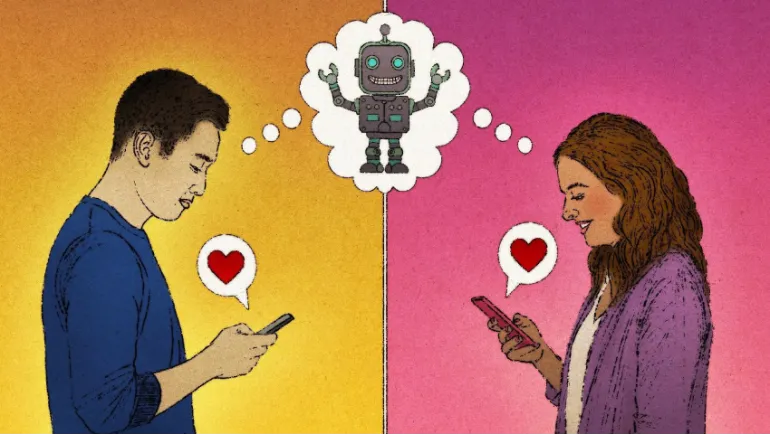
AI can introduce you to compatible people, but it cannot guarantee chemistry. AI matchmakers interview you by voice or text, suggest a few matches, and sometimes plan the date. Silicon Valley startups and big dating apps are racing to build them because swiping has worn people out.
Why Silicon Valley Is Betting on AI Matchmaking
Online dating has a burnout problem. Many users say endless swiping and small talk feel like work. Match Group's stock has fallen about 80% from its 2021 high, according to PitchBook.
Investors see an opening. PitchBook data shows dating startups raised $121 million in a recent year. Known raised $9.7 million, and Ditto raised $9.2 million. The pitch is simple: fewer profiles, more meaningful introductions, and real dates.
How AI Chatbot Matchmaking Works
AI Learns About Your Personality and Preferences
You start with a conversation. The AI asks about your values, goals, habits, and deal-breakers. Some users even share photos of their celebrity crushes to show their type.
Voice Conversations Replace Traditional Dating Profiles
Several services use a phone call instead of a profile. The AI listens, asks follow-up questions, and builds a picture of you. This approach aims to capture nuance that a bio cannot.
AI Finds Potentially Compatible Partners
The system compares your answers with other users. It then sends a small number of matches, often by text message. Algorithm-led matchmaking is not new, since early computer matching dates to the 1960s. Conversational AI makes the first step feel more personal.
Personalized Introductions and Date Planning
Some services handle the logistics. They propose a time and place, and they remind both people. This turns a match into an actual meeting.
AI Dating Startups Changing the Matchmaking Industry
Several startups lead this wave. The table below compares four of them. Details come from press coverage and may change as each product evolves.
| Startup | How it works | Pricing model |
|---|---|---|
| Known | Voice AI interview, then arranged in-person dates | Pay per date |
| Joey AI | Phone call with an AI matchmaker, matches by text, no app | Not confirmed in sources |
| Overtone | Swipeless AI matchmaking from Hinge's founder | Not yet announced |
| Ditto | Text chatbot for college students, one match per week | Not confirmed in sources |
Known Uses AI for Personalized Introductions
Two Stanford dropouts founded Known in San Francisco. Its AI interviews users by voice, then matches them with a proprietary algorithm. Users pay per arranged date. Reported fees have ranged from $15 to $30.
Joey AI Takes a Conversation-First Approach
Carly Malatskey founded Joey AI after noticing that people choose partners as casually as they scroll TikTok. There is no swiping and no app. Joey verifies users, shares photos, and connects people by text. It can also coach users through their dates.
Overtone Explores Voice-Based Matchmaking
Hinge founder Justin McLeod is building Overtone. It aims to replace swiping with curated introductions grounded in relationship science. The app has not fully launched, so judge it by results once real users test it.
Ditto and Other Startups Target Specific Communities
Ditto targets college students and sends one AI-chosen match each week. Fate, based in London, uses voice AI. Sitch sells packages of arranged dates, and Keeper offers a premium service with a $50,000 "marriage bounty."
How Dating Apps Are Adding AI Features
Bumble's AI Matchmaking Plans
Bumble is testing an assistant called Bee. It learns your values, goals, communication style, and intentions by chat or voice. A limited pilot in New York serves invited members. Bumble has said it may charge per match.
Tinder's AI-Powered Recommendations
Tinder's Chemistry feature asks personal questions and can use camera roll access to refine matches. Tinder also uses AI to suggest profile photos. Both Tinder and Bumble add AI inside apps people already use, while startups build new services around it.
Facebook Dating's AI Assistant
Facebook Dating lets users describe an ideal match in plain words. It also offers free AI help with profile intros and a dating assistant. The service has more than 21.5 million daily users worldwide.
Grindr's AI-Powered Features
Grindr's "gAI" tools include a wingman that advises on conversations, a feature that reintroduces old matches, and AI profile summaries. Its Edge tier adds chat summaries and compatibility statistics.
Can AI Really Understand Romantic Compatibility?
AI can compare values, interests, and goals well. It struggles with chemistry, humor, and emotional intelligence, which are hard to measure. Experts say algorithms estimate compatibility but cannot promise attraction or trust. Evidence that AI matchmaking improves outcomes is still thin.
Benefits and Risks of AI Matchmaking
Less Swiping and More Personalized Matches
The clear benefit is less browsing. You see fewer people, chosen for stated goals. For busy singles, that saves time and mental energy.
Privacy and Sensitive Personal Information
AI matchmakers collect intimate details, including preferences, voice, and sometimes photos. Ask what data the service stores, who sees it, and how you delete it.
Fake Profiles and AI-Generated Conversations
Fake accounts and AI-written messages remain a risk. Choose services that verify users. Before meeting, confirm your match on a video call and meet in a public place.
Overdependence on AI Recommendations
Do not treat a match score as a verdict. Experts advise using AI as a tool while you keep control of your own choices.
AI Matchmaking vs Traditional Dating Apps
The two models differ in how you find people, talk, and meet. The table below shows the main contrasts.
| Feature | AI matchmaking | Traditional dating apps |
|---|---|---|
| Discovery | AI suggests a few matches | You browse and swipe |
| Communication | Voice or text chat with an AI | Profiles and messages |
| Dates | Often arranged for you | You plan them |
| Pricing | Often per match or date | Usually subscriptions |
| User pool | Smaller | Larger |
Which Should You Choose?
- Choose AI matchmaking if swiping exhausts you and you want fewer, better-considered introductions.
- Choose a traditional app if you want a large pool and full control over who you meet.
- Use ChatGPT for profile help and date ideas, but not for finding people.
- Consider a human matchmaker if you want personal judgment and can pay more.
What Is the Future of AI-Powered Dating?
Expect more apps to drop swiping and add AI assistants. Large platforms already test them, and startups keep experimenting with voice. Pricing may shift from subscriptions to per-match fees. The real test is simple: do these tools lead to better relationships? Wait for independent results before you pay for big promises.
Frequently Asked Questions About AI Matchmaking
Can AI find you a partner?
AI can introduce you to people who match your stated goals and values. It cannot guarantee attraction, chemistry, or a lasting relationship. You still have to meet the person and decide.
How does AI matchmaking work?
The AI interviews you by voice or text about your personality, values, and preferences. It then compares your answers with other users and suggests matches. Some services also book the date.
Can ChatGPT help you find a romantic partner?
ChatGPT can help you write a profile, practice conversations, and plan dates. It cannot introduce you to real people, because it has no pool of verified singles. Dedicated AI dating apps do.
Is AI dating safe?
It carries the same risks as other dating apps, plus extra privacy concerns because AI services collect detailed personal information. Read privacy policies, limit what you share, and meet in public places.
Can AI replace human matchmakers?
Not fully. AI offers lower prices and faster introductions. Human matchmakers offer judgment, empathy, and personal accountability. Many people may use both.
Can AI plan your first date?
Yes. Some services, such as Ditto and Known, arrange the date for you. Other apps suggest venues based on shared interests.
Does AI matchmaking reduce dating app burnout?
It aims to. Fewer profiles and no swiping can reduce fatigue. Independent evidence on results is still limited.











Comments
There are no comments for this Article.